
How Many Ways Can You Spell the /ee/ Sound?
By Eyal Rav-Noy, Co-Founder, Capit Learning
Here's a question that stumps almost everyone, including teachers: how many ways can you spell the sound /ee/? Take a moment and try to list them. If you're like most people, you'll come up with three or four before you run dry. The real answer is closer to ten—and understanding why that's true, and why it isn't the problem it appears to be, unlocks one of the most powerful ideas in reading instruction.
First, try it yourself
Grab a pen and write down every spelling of /ee/ you can think of, using a real word for each. Most people produce a short list: ee (see), ea (eat), maybe e (me), and y (happy). Then they stall.
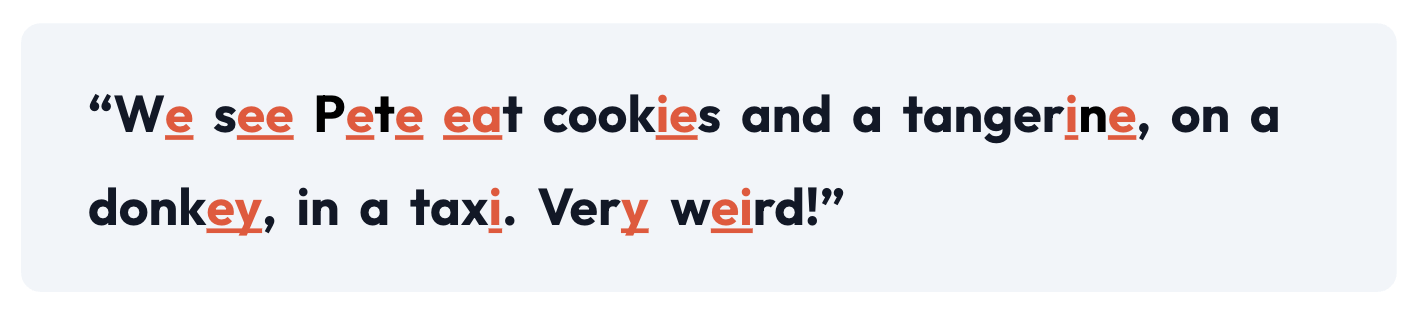
Now write down this sentence: "We see Pete eat cookies and a tangerine, on a donkey, in a taxi. Very weird!" Look at what just happened. That single sentence spells the sound /ee/ ten different ways—we, see, Pete, eat, cookies, tangerine, donkey, taxi, very, weird—and you wrote every one of them correctly without thinking about it. You already know all ten spellings. You just couldn't list them on demand.

Ten spellings, but only one concept
Here's the insight that changes everything: those ten spellings are not ten separate facts to memorize. They are ten instances of a single concept—the sound /ee/.
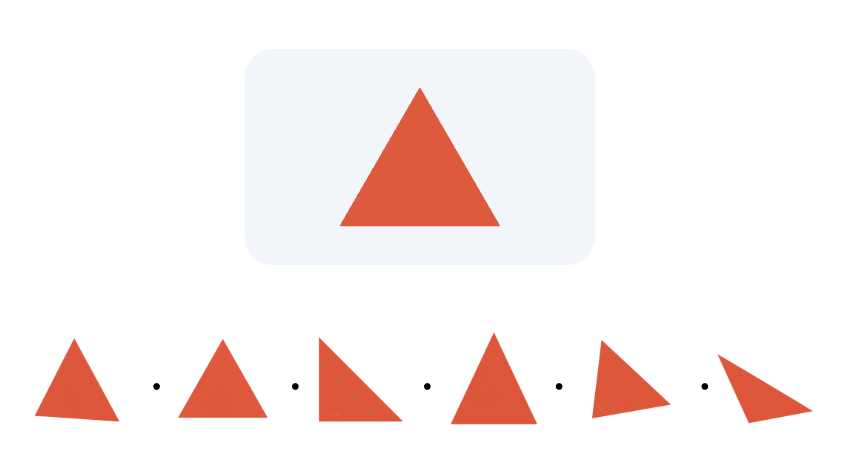
Think about triangles. Once you know what a triangle is, you can recognize an equilateral, a right, an isosceles, a scalene, an acute, or an obtuse triangle. You don't memorize six unrelated shapes—you understand one concept and recognize its variations. English spelling works exactly the same way. The sound /ee/ is the concept. Its ten spellings are just the different ways that one concept appears on paper.
This reframe is the heart of the Sound-to-Print method. When you start from the sound—rather than from the letters—the spellings organize themselves into a tidy set belonging to one familiar thing, instead of scattering into a pile of exceptions. (link "Sound-to-Print method" to /sound-to-print)
It's not just /ee/
The same pattern holds across English. Take the sound /oo/, as in the sentence: "It's super cool to sip soup and chew blue fruit in June." Count the spellings of /oo/ and you'll find about eight, all in one sentence.


Or take the sound /a_e/, as in: "Hey, look! A baby snail and eight reindeer came to play." Again, around eight ways to spell a single sound. None of these are random. Each is one concept—a sound—wearing its various written forms.


Why English has so many spellings in the first place
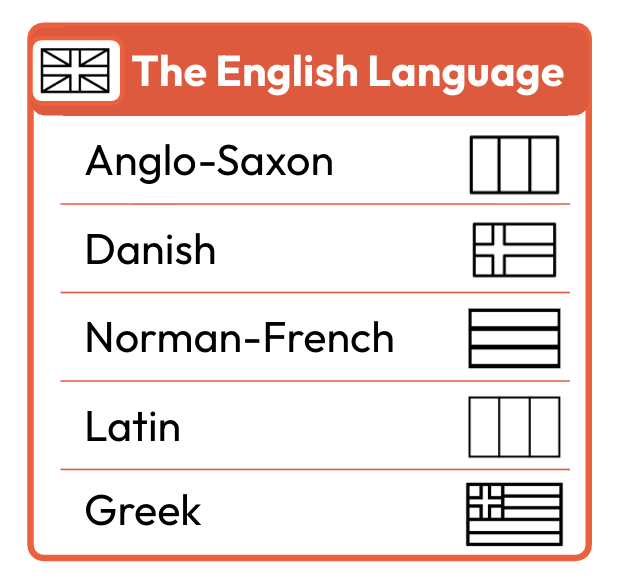
English didn't set out to be complicated. It became a composite of several languages over centuries, absorbing words and spelling conventions from each. That history is why a single sound can have many spellings. But notice: this only feels chaotic when you start from the letters and ask what they say. Start from the sound, and the system reveals its order—40+ sounds, each with a defined set of spellings, about 190+ spelling patterns in all.
What this means for teaching
If ten spellings of /ee/ are ten facts, a child faces an overwhelming memorization task. If they're one concept with ten forms, the child simply collects those forms one at a time, each anchored to a sound they've known since before they could read. That's the difference between reading instruction that feels like rocket science and instruction that feels natural. The sound is the anchor; the spellings are what you hang on it.
Frequently asked questions
How many ways can you spell the /ee/ sound?
About ten common spellings: ee (see), ea (eat), e (me), e_e (Pete), ie (cookies), i_e (tangerine), ey (donkey), i (taxi), y (very), and ei (weird). They are all written forms of one sound.
Why does English spell one sound so many ways?
Because English is a composite of several languages, each contributing its own spelling conventions. The result is multiple spellings per sound—but each set of spellings still belongs to a single, stable sound.
Isn't memorizing all those spellings hard for kids?
Not when they're taught as variations of one known sound rather than as isolated facts. Starting from the sound, children collect its spellings one at a time, which is far easier than memorizing them as unrelated exceptions.
Want to see how this works in a real curriculum?
Read the full Sound-to-Print method guide, or book a demo to see how CAPIT Reading teaches the English code in P–5 classrooms.