CAPIT Learning · School Impact Report
Beating the Odds in Compton, CA
How Lifeline Education Charter School reached 78% third-grade reading proficiency, triple the predicted rate, in a community where 95.8% of students live in poverty
78.1%
Third-grade reading proficiency
23.6%
Statistically predicted proficiency
95.8%
Students living in poverty

A school where 1 in 4 students was predicted to read on grade level!
Lifeline Education Charter School sits in the heart of Compton, California, where 95.8% of students live in poverty. The statistical models are unambiguous about what to expect from a school with that profile: fewer than one in four third graders reading on grade level. Most schools in similar circumstances spend years fighting to inch that number upward. The country has largely come to accept those margins as the ceiling.
Lifeline rejected the ceiling. Today, 78.1% of its third graders are proficient readers—more than three times the predicted rate. That result earned Lifeline national recognition in The 74 Million's report on the highest-performing high-poverty schools in the country.
The number alone doesn't tell the full story. What makes Lifeline's result extraordinary is how they got there: one methodology—the Sound-to-Print method at the heart of CAPIT Reading—implemented with fidelity, in every classroom, every day. No workarounds. No lowered expectations. Just strong instruction that trusted the kids to rise to it. And they did.
This is Lifeline's story, in the words of its principal, Jillian Smith.
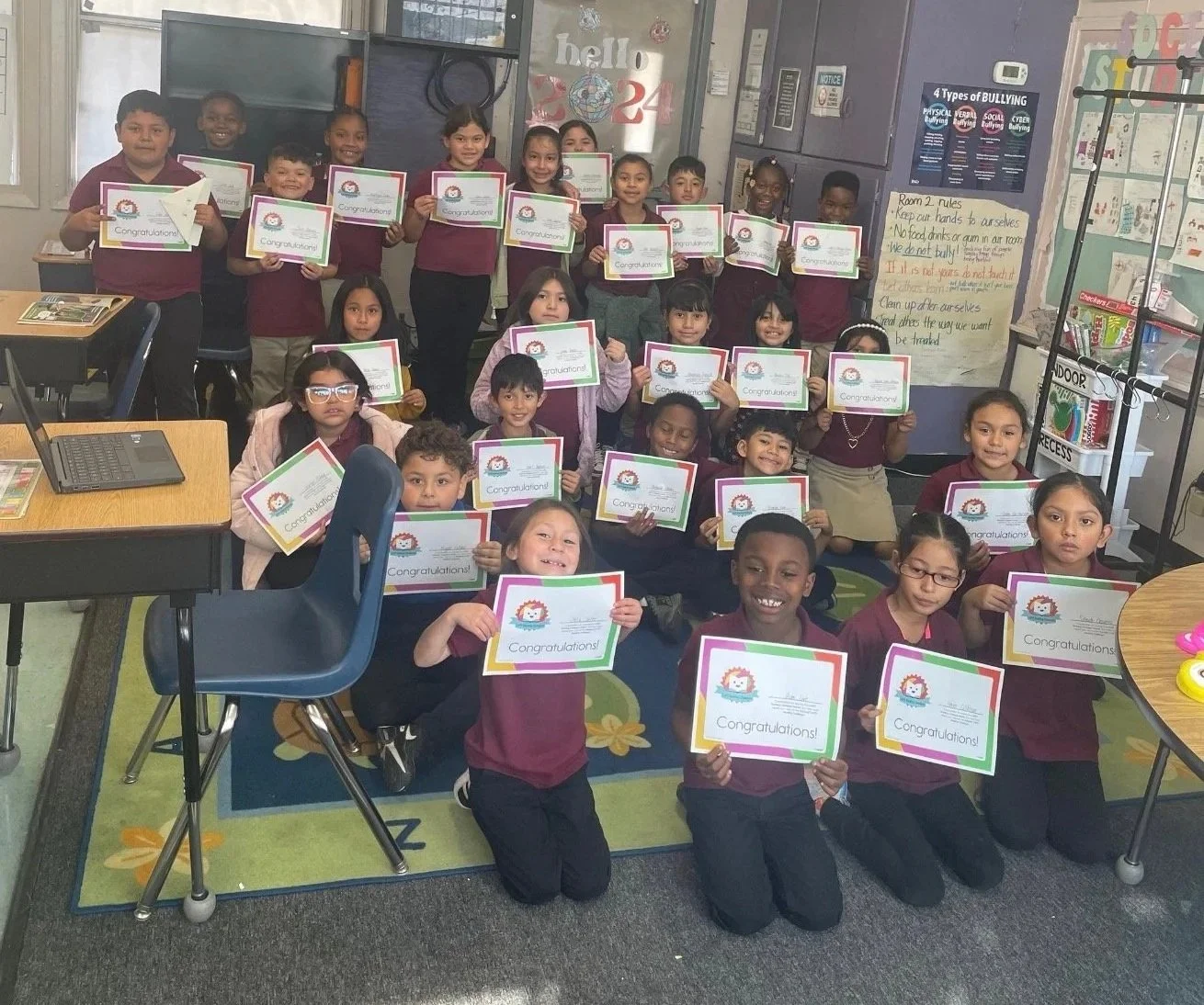
Students at Lifeline Education Charter School in Compton, CA celebrating reading achievement with
CAPIT Reading
Principal Jillian Smith: "Poverty does not define what students are capable of achieving."
"Consistency and collective commitment—every single day."
A mix of pride and validation. We've been deeply committed to this work for the past three years, so seeing that growth in the data felt like confirmation that what we're doing is working. I attribute it to consistency and collective commitment. Our teachers didn't just implement CAPIT Reading—they invested in it. They built strong routines, used the data to drive instruction, and stayed focused on foundational skills every single day.
"It's the mindset that underestimates students—not poverty."
Poverty presents challenges, absolutely, but it does not define what students are capable of achieving. What matters most is access to strong instruction, high expectations, dedicated educators, and consistency. Our results show that with the right systems and commitment, high levels of achievement are absolutely possible in high-poverty schools.
The Lifeline result is replicable—and here's exactly what it took
Principal Smith is clear about what made the difference: it wasn't luck, demographics, or a single charismatic teacher. It was a structured, explicit reading methodology, implemented consistently across every classroom, supported by coaching and collaboration, and treated as a non-negotiable priority over time.
That is the model CAPIT Reading brings to every partner school. The Sound-to-Print method—also called Linguistic Phonics or Speech to Print—gives teachers a clear instructional pathway and students the foundational skills that determine whether they become readers. The results Lifeline produced aren't meant to be exceptional. They're the kind of outcome this model is designed to make ordinary.
Ready to see what this could look like at your school?
Principal Jillian Smith: "It takes time to build systems, train teachers, and stay aligned as a school.”
"Consistency and collective commitment—every single day."
A mix of pride and validation. We've been deeply committed to this work for the past three years, so seeing that growth in the data felt like confirmation that what we're doing is working. I attribute it to consistency and collective commitment. Our teachers didn't just implement CAPIT Reading—they invested in it. They built strong routines, used the data to drive instruction, and stayed focused on foundational skills every single day.
"It's the mindset that underestimates students—not poverty."
Poverty presents challenges, absolutely, but it does not define what students are capable of achieving. What matters most is access to strong instruction, high expectations, dedicated educators, and consistency. Our results show that with the right systems and commitment, high levels of achievement are absolutely possible in high-poverty schools.
"Immediate teacher buy-in surprised us most."
How willing our teachers were to embrace a completely new approach. There was immediate buy-in, which made the transition much smoother than we anticipated. What stood out even more was the collaboration—teachers worked together to make sense of the materials and had ongoing conversations about student growth. When students got stuck, it became an opportunity to problem-solve together, not a setback.
"It's replicable—but you can't treat it like a program you try for a few months."
That it's absolutely possible, but it requires commitment and consistency. You can't treat it like a program you try out for a few months. It takes time to build systems, train teachers, and stay aligned as a school. And support your teachers—coaching, collaboration, time to plan. When teachers feel confident and supported, the implementation is much stronger, and that's what leads to results.
"The moment our students started seeing themselves as readers…"
Our very first year, our second-grade class won the sound challenge. I still remember the energy when it was announced—students cheering, some even surprised at what they'd accomplished. It wasn't just excitement; it was pride. After that, you could see a shift. Students carried themselves with more confidence and were more eager to engage, not just in reading but across their learning. It marked the beginning of our students seeing themselves as capable readers.
Bring CAPIT Reading to your school
CAPIT partners with school and district leaders to implement Sound-to-Print foundational literacy from PreK through Grade 3 and beyond. Book a demo to see what it could look like for your students.